





Overview
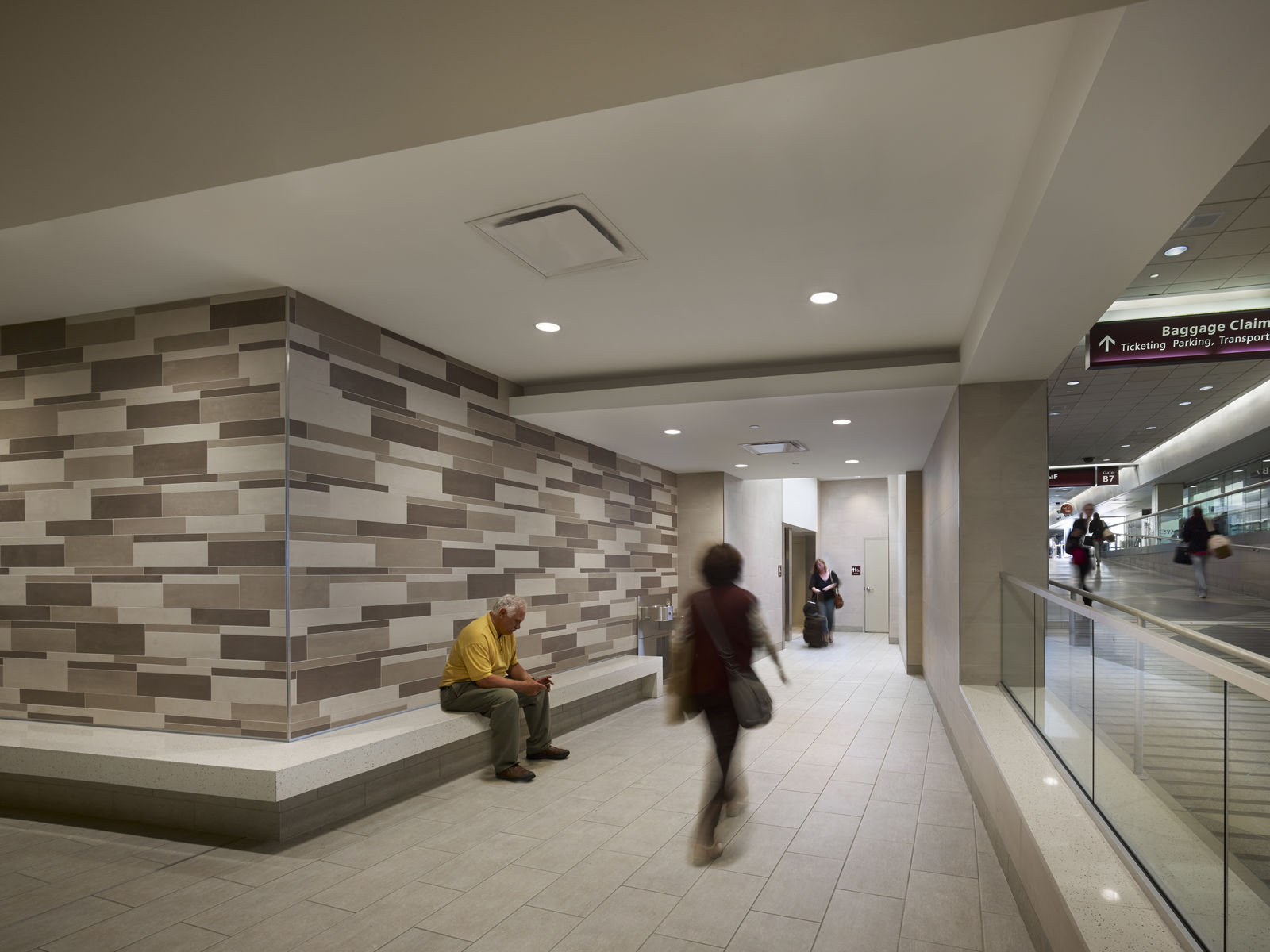
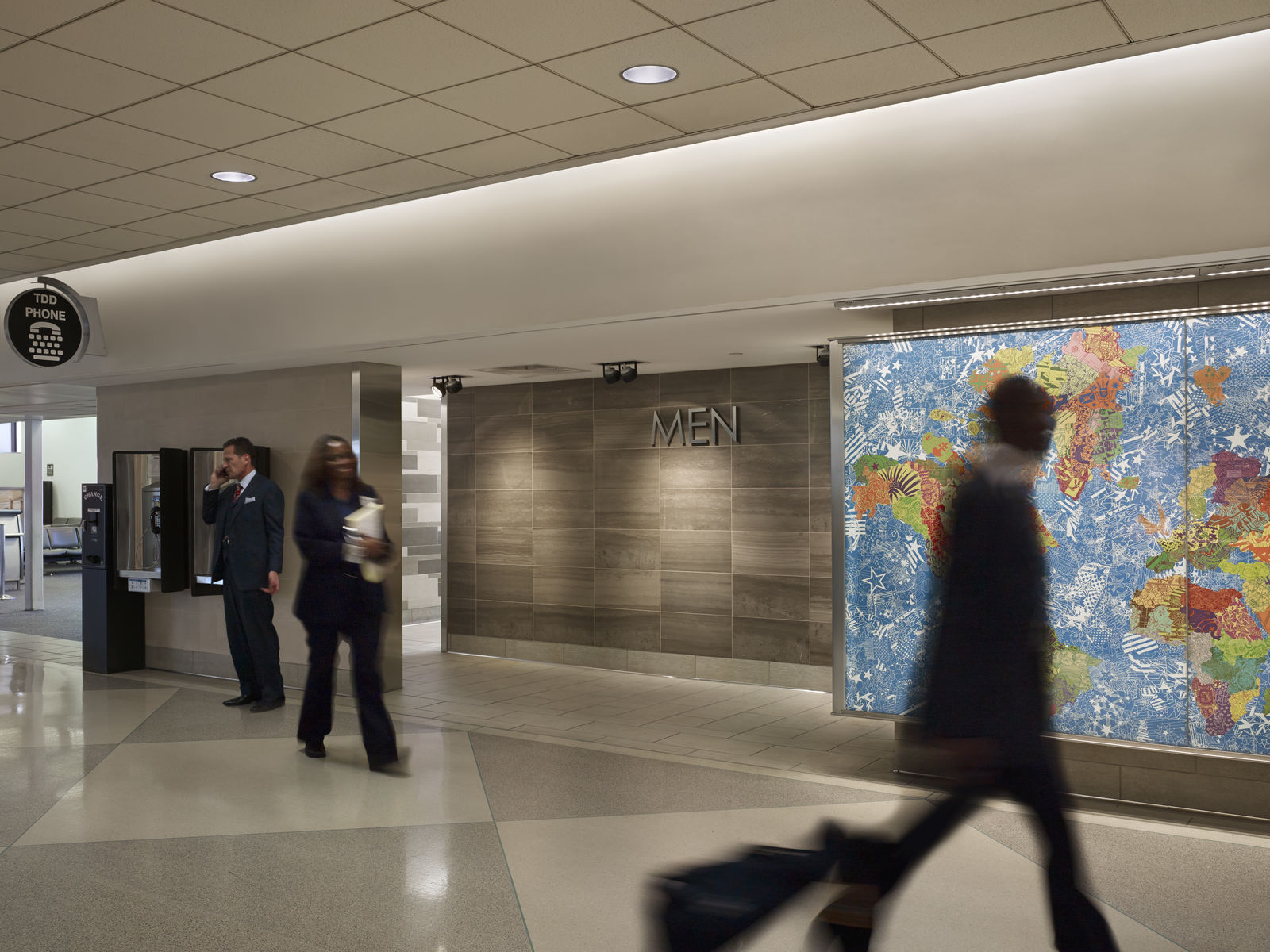
Philadelphia International Airport (PHL) has been modernizing 48 sets of passenger-facing restrooms since 2012. Goals for the multi-million-dollar program include improving quality and comfort, accommodating more travelers, expanding ADA accessibility, and implementing sustainability measures. The renovated restrooms feature sustainable design elements like efficient low-flow faucets and toilets, LED light fixtures with daylight and occupancy sensing, increased ventilation, and use of recycled content. Artwork by local artists on the concourse-facing walls orients travelers to entrances and brightens the concourse.
Phasing
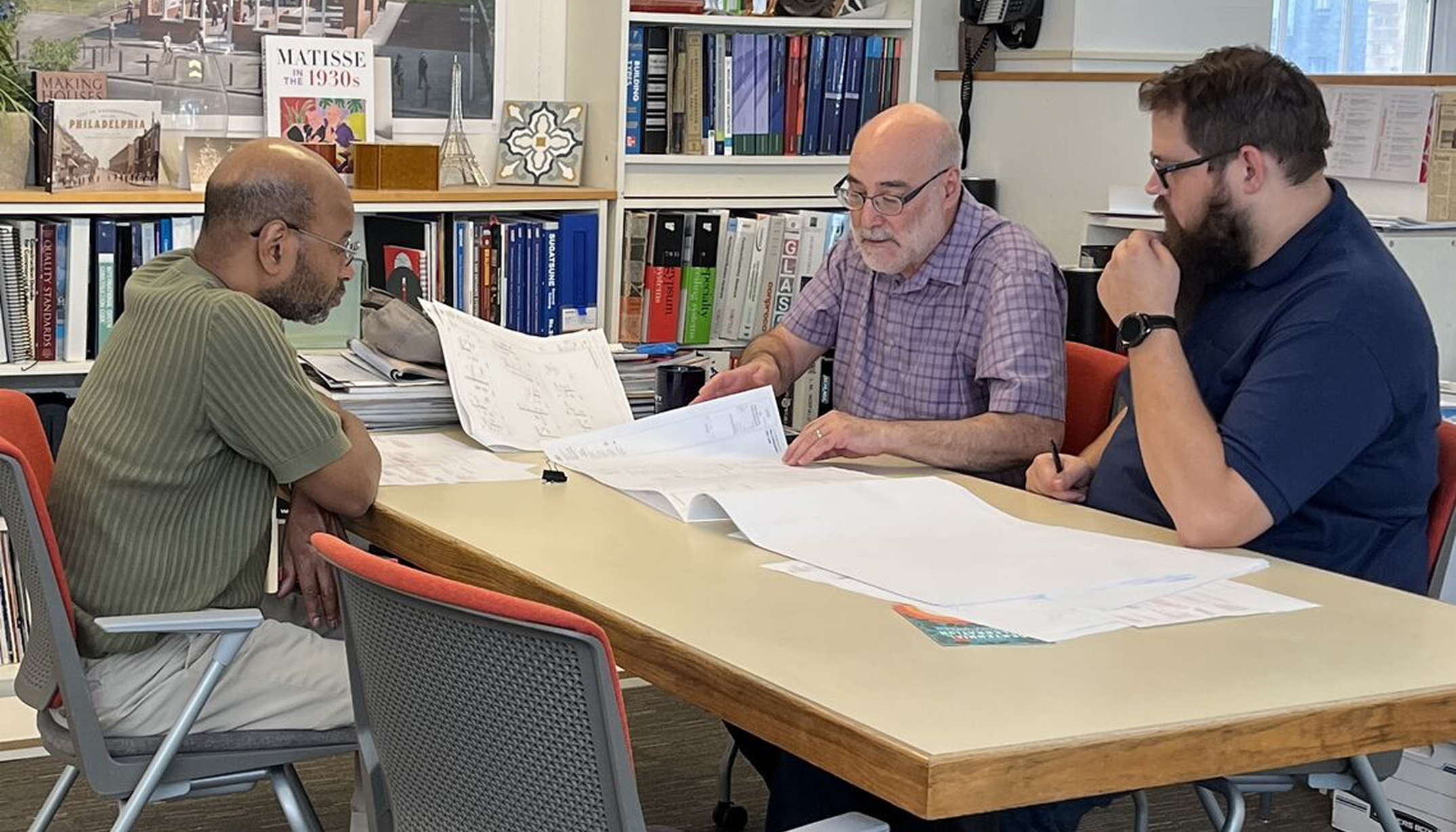
To minimize disruption at the busy airport, the program was divided into eight phases. KMA was architect of record for Phases 1 and 2, and were on CDA&I’s team for Phases 3 and 4. Phases 5 through 8 were awarded to HDR, and work began in October 2023. Our participation continues, with a dedicated staff member contracted to assist PHL with construction document review.
Restrooms in Phases 1 and 2, first renovated in 2013, were refreshed. The goal was to make four sets of restrooms in the concourse of Terminals B and C more comfortable and appealing while increasing energy and water efficiency. Tasks included planning and design of new layouts, finishes, and custom millwork.
Phase 3 improved 11 sets of restrooms at Gates F-31 and F-25, Terminals D and E ticketing and Terminal D baggage claim. Phase 4 added a public handwashing station outside of a restroom, two service animal relief areas, and an adult changing/nursing mother’s room. The latter was informed by a study led by KMA designers who are also mothers. Phase 5 comprised eight modern, tech-enabled restrooms and added another permanent lactation suite and Service Animal Relief Area (SARA). This phase began in June 2023 and was completed in August 2025. The “TransformPHL” restroom renovation project is now in Phase 6 of 8 and has completed 28 of 48 upgraded restrooms. Phase 6 completion is anticipated by the end of 2026.
Design Strategy
To achieve high-quality outcomes, KMA coordinated the new architecture with existing conditions; addressed security, mechanical, plumbing, and electrical systems for improved energy efficiencies; and phased the construction in heavily used areas.
There were also opportunities for innovation. Together with Burns Engineering, KMA assisted PHL’s team with their “smart restroom” pilot project. For two sets of restrooms, we revised bid documents to include a monitoring and notification system using data-collecting sensors embedded in stall lights and touchless equipment such as flushometers; faucets; and towel, toilet paper, and soap dispensers. Monitors at restroom entrances tracked usage, and an integrated system to gather user feedback rounded out the effort by PHL to improve the guest experience and provide maintenance and custodial services with timely and relevant information.